Technology in the Field: How Drone & AI Inspections Are Scaling for Large-Volume Parking Lot Portfolios
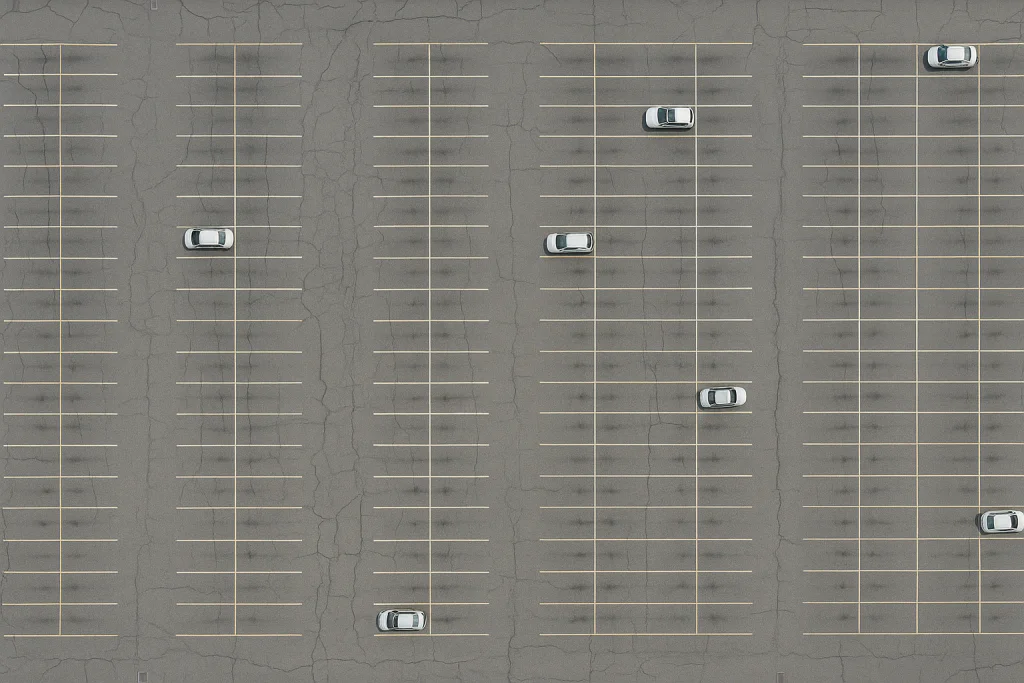
For large construction companies managing parking lot resurfacing, one of the biggest challenges is scale. A single shopping center or logistics hub might have dozens of lots, each in a different state of deterioration. Managing inspections, estimating repair volumes, and coordinating crews across multiple sites can easily consume weeks. The administrative work alone often costs more than the actual field surveys.
The construction industry is beginning to recognize that the key to scaling is not more manpower, but better information. Accurate condition data, collected quickly and consistently, allows teams to plan resurfacing projects like a production line rather than a series of one-off jobs. That is where drones and artificial intelligence are beginning to play a central role.
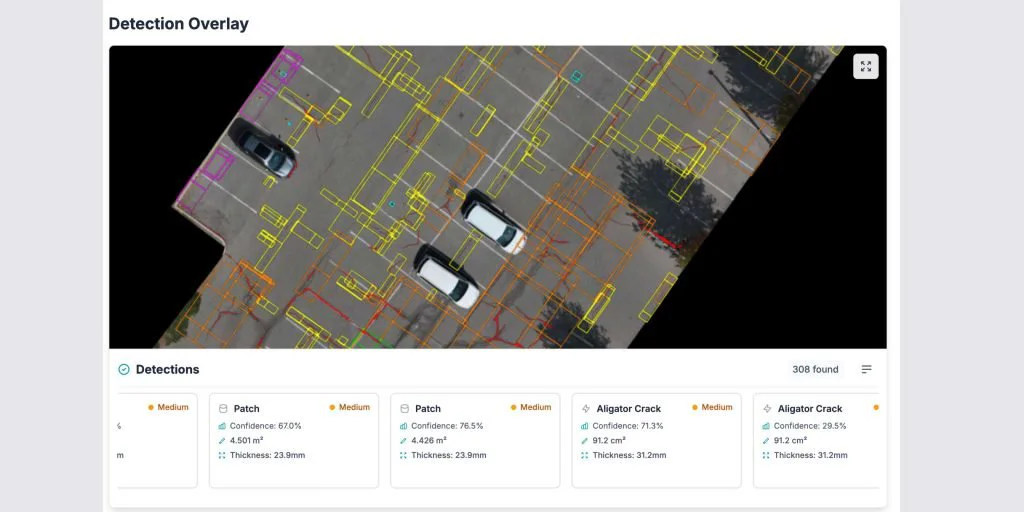
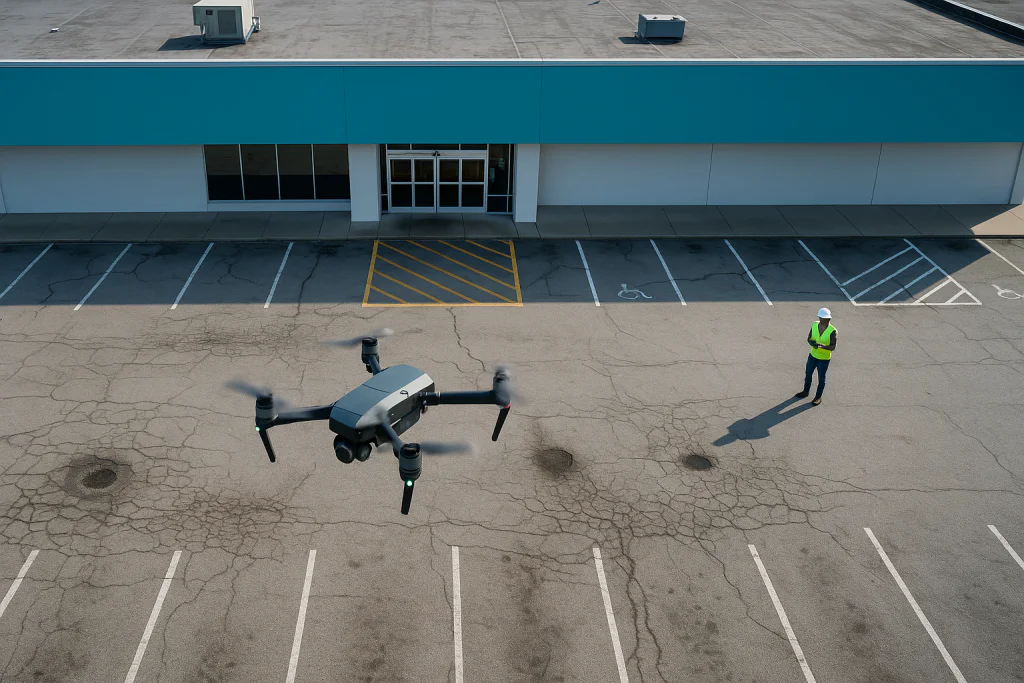
Drone-based pavement inspection provides a way to map entire sites in a single automated flight, usually lasting about 10 to 15 minutes. The images are then processed by AI systems like HALO AI, which analyze the surface for cracks, raveling, rutting, and other distresses. The results are available in a few hours, providing a digital map of every defect with its exact location and severity.
For large-volume portfolios, this level of automation changes everything. A construction company can survey dozens of parking lots in a week, without sending inspectors to each site. Managers receive uniform reports, comparable across all properties, and can prioritize resurfacing work based on real data rather than visual estimates.
The scalability also extends into pricing and planning. When all defects are quantified digitally, estimating repair quantities becomes much more predictable. The company can identify which lots need full resurfacing and which can be preserved with patching or sealcoating. That precision reduces wasted material, shortens project time, and strengthens client trust.
Another often overlooked advantage is how this technology supports long-term portfolio management. Many large property owners—retail chains, business parks, and logistics centers—want multi-year pavement plans rather than reactive repairs. Construction firms using drone and AI inspection tools can provide not just a one-time resurfacing quote but a complete maintenance strategy backed by objective data.
In practice, this means construction companies evolve from being service providers to strategic partners. The data they collect through HALO AI gives them a recurring role in maintenance planning, forecasting, and performance tracking. Over time, this builds stronger client relationships and recurring contracts.
Scaling inspection and resurfacing with drone and AI technology is not about replacing people—it’s about freeing engineers and project managers to focus on decision-making instead of data collection. As the industry moves toward automation and transparency, those who master these tools will set the standard for how parking lot portfolios are maintained in the future.