BVLOS Drone Operations: What Part 108 Means for Infrastructure Inspection Programs
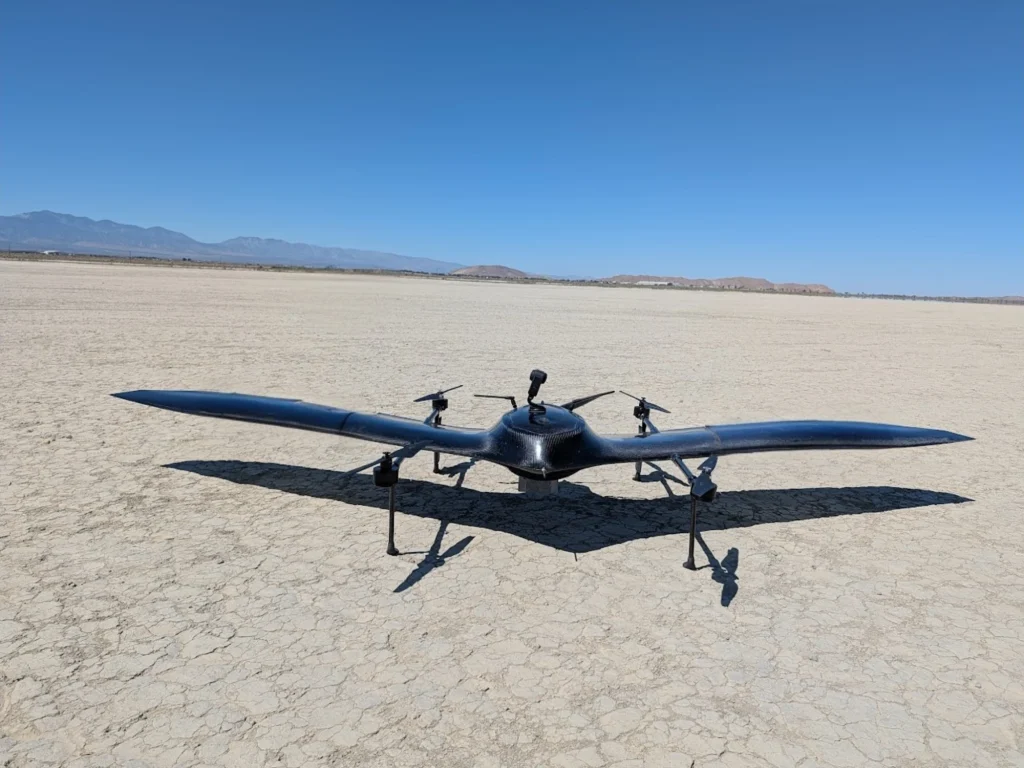
For most of the last decade, the single biggest constraint on drone inspection at scale wasn’t technology. It was regulation. Drones capable of flying long corridors, covering hundreds of kilometers of pipeline, transmission line, or transport infrastructure in a single mission, have existed for years. The requirement to keep those drones within the visual line of sight of a pilot on the ground turned a technology problem into an operational one, limiting what could actually be done in the field regardless of what the hardware could theoretically achieve.
Part 108 changes that equation. The FAA’s Notice of Proposed Rulemaking, published on August 7, 2025, is the most significant development in commercial drone regulation since Part 107 launched in 2016, and for infrastructure inspection programs specifically, it represents a shift from incremental improvement to genuine operational transformation.
What BVLOS actually means and why it has mattered so much
BVLOS stands for Beyond Visual Line of Sight. Under the existing Part 107 framework that has governed most commercial drone operations since 2016, pilots are required to maintain direct unaided visual contact with their aircraft at all times during flight. In practice, this limits effective operational range to roughly 500 meters to 1 kilometer depending on conditions, aircraft size, and visibility. Any operation beyond that range requires a specific FAA waiver, a process that has historically taken months, costs significant resources to prepare, and produces approvals that are tied to specific locations and conditions rather than transferable across a program.
The result has been a structural mismatch between what drone inspection technology can deliver and what regulatory frameworks have allowed operators to deploy at scale. A utility with 2,000 kilometers of transmission corridor to inspect can’t run an economically viable drone program under VLOS constraints. The repositioning requirements alone, moving ground crews and equipment along the corridor to maintain visual contact, eliminate most of the efficiency advantage that makes drone inspection attractive in the first place.
What Part 108 actually proposes
Part 108 replaces the case-by-case waiver system with a standardized framework specifically designed for BVLOS operations. The proposed rule covers aircraft weighing up to 1,320 pounds, a significant expansion from the 55-pound limit under Part 107, and allows operations at or below 400 feet in FAA-approved areas.
The framework introduces two approval levels. Permitted Operations covers lower-risk BVLOS activities that meet defined performance standards and can proceed without individual case review. The Operational Certificate pathway covers more complex operations and requires a documented safety case, but produces an approval that covers an entire program rather than individual flights. This is the structural change that matters most for infrastructure inspection: instead of applying for a waiver every time a mission profile changes, operators with an Operational Certificate can run routine corridor inspections under a standing approval framework.
The technical requirements embedded in Part 108 reflect what safe BVLOS operations actually require. Detect-and-avoid systems that can identify and respond to other aircraft without pilot visual confirmation. Remote ID that broadcasts aircraft identity and position in real time. Continuous position tracking integrated with UTM, Unmanned Traffic Management, systems that manage airspace the way air traffic control manages manned aviation. Two new operational roles, Operations Supervisor and Flight Coordinator, formalize the crew structure that complex BVLOS missions already require in practice.
The timeline is important context. The public comment period closed in October 2025 with over 3,000 responses from industry stakeholders. A final rule is expected sometime in 2026, with implementation likely following six to twelve months after finalization. Infrastructure inspection programs planning their drone strategy now are planning for a regulatory environment that will look meaningfully different within the next twelve to eighteen months.
What this means specifically for infrastructure inspection
The operational implications of routine BVLOS approval are different for infrastructure inspection than for other drone applications like delivery or agriculture, and they’re worth working through specifically.
Pipeline inspection is the clearest example. A gas transmission corridor running several hundred kilometers crosses terrain types, land ownership boundaries, and airspace environments that make VLOS inspection operationally impractical for anything beyond short segments. Under the current waiver system, corridor inspection programs have either relied on manned aircraft, accepted the inefficiency of VLOS-constrained drone operations, or operated in the limited number of locations where existing BVLOS waivers have been granted. Part 108 Operational Certificates change this from an exception requiring individual justification to a standard operating framework applicable across an entire corridor program.
Power line inspection has a similar profile. Transmission networks extend across hundreds of kilometers of mixed terrain, often in areas with limited ground access. The inspect-reposition-inspect cycle that VLOS constraints impose on drone operations adds cost, time, and personnel requirements that undermine the economic case for drone inspection on long corridors. BVLOS operations under Part 108 allow a single aircraft, managed by a qualified crew, to fly extended corridor segments continuously, producing consistent, geolocated condition data across the full route without the gaps that repositioning introduces.
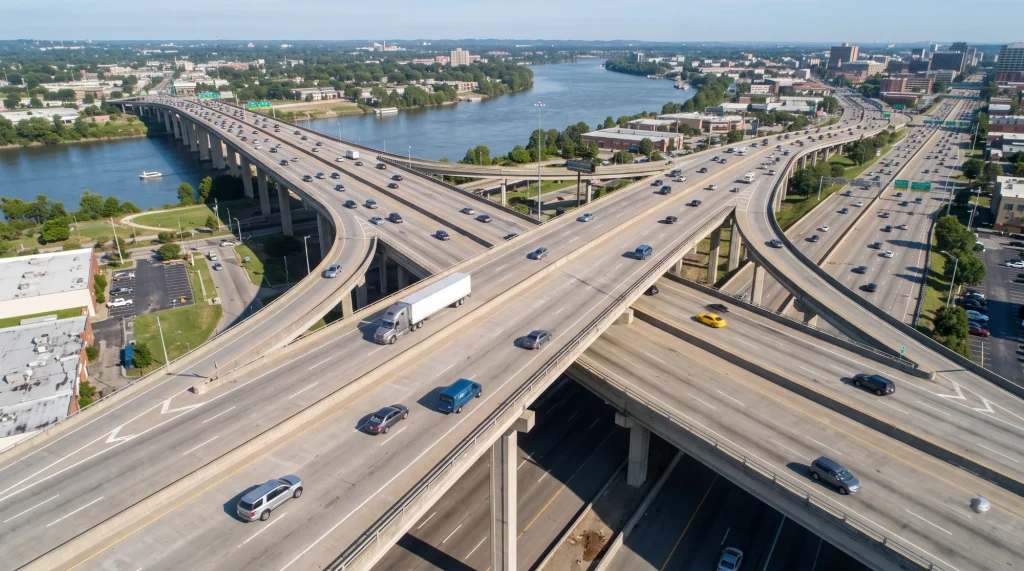
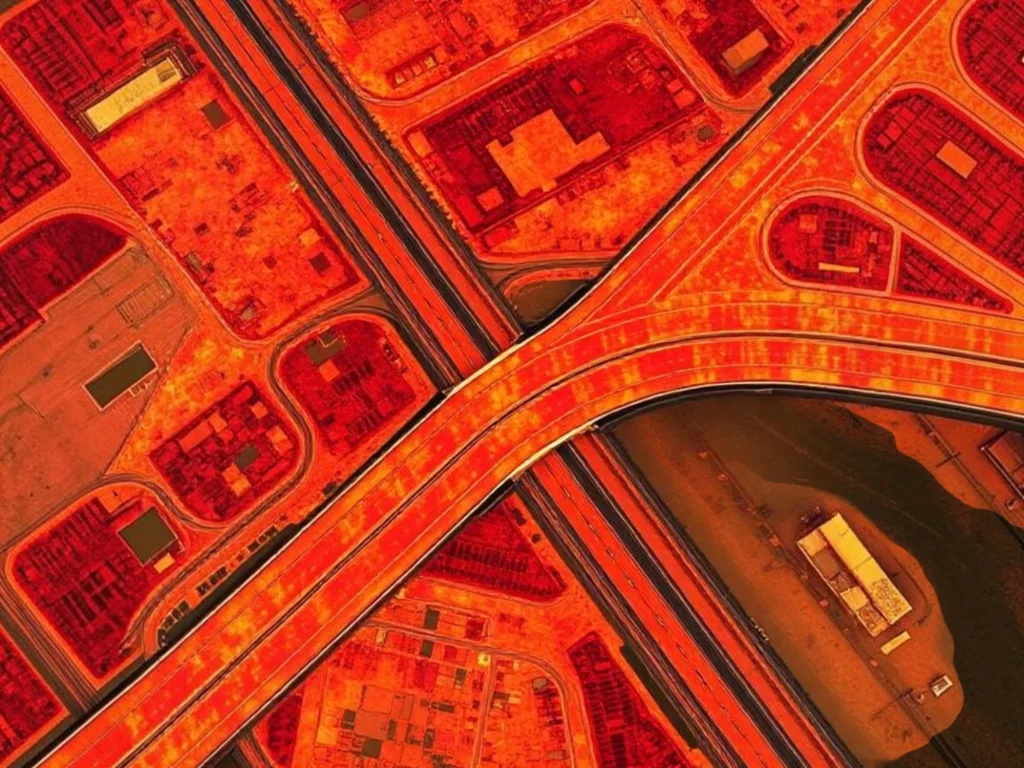
Bridge and transport infrastructure corridor inspection benefits from the same dynamic. A motorway network or rail corridor that requires periodic structural and pavement condition assessment currently requires either manned aircraft or a ground-based drone program that moves inspection equipment along the route section by section. BVLOS capability makes a corridor-wide drone inspection program operationally viable in a way that genuinely changes the frequency and coverage of routine assessment.
The technology requirements that come with it
Part 108 doesn’t just change what’s permitted. It defines what’s required, and infrastructure inspection programs planning for BVLOS operations need to be building toward those requirements now rather than treating them as future compliance issues.
Detect-and-avoid capability is the most technically demanding requirement. DAA systems must be able to identify cooperative traffic, other aircraft broadcasting position via ADS-B or Remote ID, and non-cooperative traffic, aircraft without electronic conspicuity, and respond with avoidance maneuvers without pilot visual input. The performance standards for DAA systems under Part 108 are still being finalized, but the direction is clear: passive optical detection alone will not be sufficient for most operational environments, and integrated sensor suites combining radar, acoustic detection, and optical systems represent the direction the industry is moving.
Connectivity is the enabling infrastructure behind everything else. BVLOS operations require reliable command and control links across the full operational range of the mission, which for corridor inspection programs means connectivity solutions that work across mixed terrain including rural areas, valleys, and locations with limited cellular coverage. The transition from local radio links, which are range-limited by physics, to cellular and satellite-based connectivity solutions is already underway among operators preparing for Part 108.
What infrastructure operators should be doing now
The practical question for infrastructure inspection programs isn’t whether Part 108 will change their operations. It’s whether they’ll be positioned to take advantage of it when the framework is finalized, or whether they’ll spend the following year catching up.
Operators building in-house drone programs need to assess whether their current platform choices will meet Part 108’s technical requirements. NDAA compliance for government-connected contracts is already a baseline, and the additional technical requirements of BVLOS, DAA capability, Remote ID, UTM integration, narrow the field of viable platforms further. Organizations that have built programs around hardware that won’t meet Part 108 requirements face a more difficult transition than those making platform decisions now with the coming framework in mind.
For organizations working with specialist drone inspection providers, the relevant question is whether their current or prospective providers are actively building BVLOS capability rather than waiting for regulatory finalization. The providers who will be able to deliver scaled corridor inspection programs when Part 108 is implemented are the ones investing in DAA systems, connectivity infrastructure, and crew certification pathways today. Asking a provider directly about their Part 108 readiness is one of the cleaner ways to distinguish operators with genuine long-range ambition from those whose capability stops at the current VLOS boundary.
The broader shift
Part 108 is not just a regulatory update. For infrastructure inspection, it is the moment when drone technology’s theoretical capability and its practical operational envelope finally align. The inspection programs that have been constrained by the requirement to keep a pilot’s eyes on the aircraft, running at a fraction of the coverage and efficiency that the underlying technology could deliver, are about to operate in a fundamentally different environment.
The organizations that treat that transition as something to prepare for rather than something to react to will define what infrastructure inspection looks like for the next decade.