Bulgaria’s Unmanned Aerial Systems Cluster
Authors: Georgi Stoyanov, Simeon Stoychev, Stefan Hristozov, Tihomir Nedev, Veselin Hlebarov
June 2024
Download as PDF
Image: Dronamics.com
EXECUTIVE SUMMARY
Bulgaria, unfortunately, is not one of the leaders in the global aviation industry. Nevertheless, the country has always been part of the aviation world since the beginning of XX century. Thus, Bulgaria has developed certain robust traditions in this filed in terms of expertise, public and military authorities, education institutions, and aviation infrastructure. The global advent of drone technologies has opened up new opportunities for Bulgarian technological companies in this filed. During the 1960s Bulgaria saw the first introduction and implementation of unmanned aerial vehicles for military purposes in Bulgaria. More recently, the country has witnessed innovation driven technological and business success in this field of companies, which come from its start-up ecosystem.
The drone technology, with its production and cost-efficient character, allows countries with underdeveloped aviation industries, such as Bulgaria, to implement technological and business innovations in order to promote rapid economic and corporate expansion in this new field. The existing expertise accumulated human capital and traditions in the aviation industry, the access to the European Union markets, funding and investments opportunities as well as the increased global commercial and military demand for these technologies define a promising outlook for the Bulgarian drone cluster. However, the general challenges that the companies are facing on the Bulgarian market, including its underdeveloped public institutions, suboptimal investment environment and lagging regulatory framework may prevent the cluster from developing and realizing its growth and competitive potential to the fullest extent.
Based on the research and the conducted interviews, we recommend a series of possible solutions to the difficulties hindering the growth and the development of the Bulgarian drone cluster. Most importantly, both the private and the public sector should work internally as well as collectively so as to create an environment, which fosters the growth of the existing successful players on the market and the creation of new companies driven by innovation. Taking example from other more developed clusters in Bulgaria such as the ICT, the drone cluster should establish non-government entities promoting the interests of the sector and speaking with one single unified voice before the public authorities influencing public decision making. Further, the authorities should seek ways to develop the legal framework, in particular concerning the U-space, in view of promoting innovation and regional leadership in the field. In addition, the existing neglected aviation infrastructure should be put into use to serve the needs and the development of the cluster. The public defence sector should also place focus on the existing innovative drone solutions in the military field and work together with the established companies of the cluster, some of which already provide military solutions on the global market. The education institutions, and in particular the universities, should place a special focus on the unmanned aerial systems and establish working collaboration with the private sector.
I. COUNTRY OVERVIEW
- Putting Bulgaria in Context
- Economic Competitiveness Overview
Bulgaria is a developing democracy and developing market economy located in South-Eastern Europe. It has been a member of NATO since 2004 and member of the European Union since 2007. During this period, Bulgaria has greatly benefited from the security and stability within the NATO alliance as well as from access to the common market and the rule of law provided by the EU institutions, which partially compensates its own internal institutional deficiencies. Recently, the country has also managed to join the Schengen Area by air and sea and expected to join by land in 2024 or 2025.
Bulgaria possesses land area of 110 994 km² and a Black Sea coastline of 378 km making the country 16th largest country in Europe and the 105th biggest in the world. The strategic geographic location in South-Eastern Europe makes it a gateway between Asia and Europe. In fact, the land border between Bulgaria and Turkey is one of the busiest in the world. The country has direct access to the Black Sea as well as, via the Greek ports, to the Mediterranean Sea.
Bulgaria’s economy (EUR 14,556 GDP per capita) ranks 56th in the world (PPP). Bulgaria has experienced robust economic growth in the past five years (2017-2022) ranging from 2 % to 7 % annually. However, the economic growth has slowed down in 2023 to 1,8% and is projected to remain at the same level in 2024. Bulgaria’s exports of goods and services amount to 61,33% from the GDP and of those the share of exports to the EU is around 60%.
The size of the Bulgarian population is 6,5 mln. people and its labour force size are 2.99 mln. Despite experiencing robust labour productivity growth reaching an all-time high in Q1 2024 (124.68 p), the country has one of the fastest shrinking populations and respectively labour force. The latter has increased the willingness and need of the employers to attract labour force from outside the EU. However, the level of unemployment has remained stable for the past five years fluctuating around 5%. Furthermore, the Gini index has steadily improved in the past five years falling to an all-time low.
The country also has one of the lowest public debts amounting to 23.1% of its GDP. Its is effectively tied to the euro by a fixed exchange rate since 1997. Bulgaria has recently experienced a higher inflation rate compared to its usual low levels, toping at 15,33% in 2022 and gradually coming down in 2023 and 2024. The country is also aiming to enter the Eurozone, which most probably can take place no earlier than 2026 due to the fact that Bulgaria still does not meet marginally the Maastricht inflation criterion.
In conclusion, Bulgaria’s macroeconomic competitiveness is comparatively in line with other developing countries in the Europe Union and measures 57th on the Global Competitiveness Index Ranking in 2023 (Global Competitiveness Index). Bulgaria is still struggling to establish fully functioning democratic institutions and the rule of law, such as independent and impartial courts, professional administrations, effective anti-corruption authorities and adequate, robust and predictable, which also result in severe political instability in the last five years.
- Historical Overview of the Bulgarian Aviation
- Bulgarian Aviation
Bulgaria has been part of the aviation world from the very beginning of its history. The first recorded flight was 1892 at the international exhibition in Plovdiv, Bulgaria, when for the first time in the history of the country a balloon flight demonstration took place. In the beginning of the 20th century, during the First Balkan War, Bulgaria was one of the first countries to use its aviation for conducting bombing raids and reconnaissance missions.
After the defeat of the First World War and the signing of the Treaty of Neuilly-sur-Seine, Bulgaria was stripped from its military aviation and prohibited from develop technologies and industry in this field for 20 years. Nevertheless, in the 1930s Bulgaria established a military cooperation with Germany and developed its own aviation industry, including aircraft manufacturing, military capabilities and aviation infrastructure/
Following the Second World War, during the Cold War, Bulgaria become part of the Soviet sphere and member of the Warsaw Pact. During this period its aviation industry was mainly driven by the soviet technological developments in the field both in military and civilian respect, including space exploration flying the first Bulgarian cosmonaut aboard the Soyuz 33 mission.
After the fall of the Berlin wall and the totalitarian regime in Bulgaria, the country reestablished its democratic government and underwent harsh economic transition to private property-based market economy. In the first decades of this period, even after joining NATO, its civil and military aviation industry and services remained deeply rooted in the Soviet legacy and suffered heavily as a result of the experienced economic difficulties of the country. Nevertheless, the country managed to a certain extent to preserve its traditions in the aviation sector, including in the universities, the public and regulatory authorities, the military and civilian aviation.
- Bulgarian Electronics Industry
The Bulgarian boasts export-oriented electronics industry known for its highly qualified workforce. Bulgarian electronics sector serves mainly the automotive, telecommunications, and consumer electronics market. During the Cold War, the country put heavy emphasis on the development of microelectronics and electronics production, which experienced decline after 1989 due to lack of investment, outdated equipment and inability to compete with the global market as a result of the general economic difficulties facing the country. According to recent reports, there are more than 400 economically significant enterprises producing electronics and electrical products in Bulgaria, employing more than 43,000. The Bulgarian electronic industry has a potential to play a vital for the drone cluster demanding such products and expertise.
- Bulgaria’s Electronics, Robotics and Modelling Clubs
Bulgaria has an established community of electronics, robotics, and modelling clubs, which foster innovation and education among its members. The clubs play an especially important role in helping the young people to develop their skills and interests, gain experience and knowledge in these fields. As a result, they serve as platform for innovation, creativity, and learning, contributing in the long-term to the development of a skilled workforce in the high-tech industries.
- Historical Evolution of UASs
Early Beginnings (Pre-1900s)
The concept of unmanned flight predates practical application, with origins in myths and early experiments. Notably, in the mid-19th century, Austria used unmanned, bomb-filled balloons for military purposes during the siege of Venice in 1849.
World War I and Interwar Period
The first significant advancements in UAS technology came during and after World War I. In 1916, the British developed the Aerial Target, an early version of an unmanned aircraft intended as a flying target for training military gunners. Around the same time, the Ruston Proctor Aerial Target, inspired by the work of Nikola Tesla, was one of the first to resemble a modern UAS but was never used in combat.
World War II
The development of UAS technology accelerated during World War II. The U.S. Navy, under the program name Operation Anvil, converted old bombers into drones to deliver explosives. These UASs were essentially early versions of cruise missiles, with one famous mission involving the use of a drone flown by actor and inventor Leslie Howard.
Cold War Developments
The Cold War era saw significant advancements in UAS technologies, mainly driven by reconnaissance needs. The U.S. developed several UASs like the Ryan Firebee and the Lockheed D-21, which were used for high-altitude, high-speed reconnaissance over hostile territories, notably during the Vietnam War.
Modern Era and Technological Advances (1990s to Present)
The 1990s marked a turning point for UAS deployment, with technology allowing for smaller and more efficient designs. This period saw the introduction of the General Atomics MQ-1 Predator, a UAS that could be armed with missiles and was extensively used in Afghanistan and Iraq.
Advancements in MEMS sensor technology, GPS and camera technologies further expanded the capabilities of UASs. Modern drones are used for a myriad of applications including surveillance, geodesy, agricultural monitoring, aerial photography, critical infrastructure monitoring and more recently, quick delivery services.
Commercial and Recreational Use
The 21st century also saw the rise of UASs in commercial and recreational markets. Companies like DJI innovated with models that were accessible to the general public, promoting drones for photography, videography, and as hobbyist devices.
UAS Traffic Management (UTM) / U-space
Because of their variety of shapes, sizes, flight characteristics a paradigm shift in the way how they will be introduced into the same airspace was necessary. Cloud based services will be introduced and it is expected that the connectivity will be sufficient for drones to connect and stream their location and speed vector.
- Bulgaria’s UAS History
Early Beginnings (1965-1982)
Bulgaria’s venture into unmanned aerial systems (UAS) began in 1965, spearheaded by Captain Milcho Yordanov, who demonstrated the use of small aircraft for target practice against low-flying air targets with his radio-controlled model glider. This initiative received official endorsement and led to the development of radio-controlled aerial targets, RUM-1 and RUM-2, manufactured initially in Plovdiv under military supervision. This period marked the foundation of UAS development, primarily focusing on training and combat simulations.
Establishment of UAS Production and Development (1966-1983)
In May 1966, the group led by Captain Yordanov moved to the Aviorepair Plant in Plovdiv, marking the start of industrial production of UASs in Bulgaria. By October 1968, design and technological groups were formed under the military repair bases to facilitate new developments. The RUM-1 and RUM-2 models were first to be mass-produced, followed by advanced models like RUM-2MB under collaboration with Soviet specialists. This era also saw the inception of the M-200 “Siniger” target and the Yastreb series, which incorporated more complex technologies and composite materials, reflecting a significant shift towards sophisticated UAS systems.
Evolution of UAS Capabilities (1970s-1980s)
The 1970s and 1980s were pivotal in advancing Bulgaria’s UAS technology. Development expanded beyond simple targets to more versatile models capable of higher performance and varied applications, including the reconnaissance and civilian sectors. Notable models from this period include Yastreb-1, Yastreb-2, and M-200, which showcased improved flight characteristics and operational capabilities. These UASs were equipped with more advanced navigation and control systems, indicating a shift towards integrating digital technologies.
Modern Era and Commercialization (Post-1990s)
In the post-1990s, the focus shifted towards utilising UAS technology for non-military applications. The emergence of companies like Armstechno signalled a new phase where UAS technology was not only used for military training and target practice but also for civilian and commercial purposes. Innovations included micro-UASs like the AT-1 “Polish Lark,” which was equipped with sophisticated sensory and autopilot systems suitable for various applications, from military reconnaissance to ecological monitoring.

- UAS Clusters Around the World
Good examples of well-developed and financially successful UAS clusters include, but are not limited to those in the Netherlands, Switzerland, Turkey, Israel, and China. Among the most important factors for their development and success is the collaboration between business and government in terms of attracting investments, and imposing a suitable regulatory framework which would be beneficial for companies from the sector.
The Netherlands
The Netherlands managed to develop an advanced drone cluster in the Greater Rotterdam-The Hague area, consisting of 52 companies involved in the development, manufacturing and support of innovative drones & applications and a workforce of 450 specialists working in the UAS industry. Furthermore, there are 13 research and education institutes and around 4,300 students enrolled in UAS-related education. The companies in the Dutch UAS cluster include more than 40 manufacturers and more than 15 operators. The main fields of expertise in the Dutch UAS cluster include inspection, monitoring & surveillance; safety, security & drone detection; pest & crop control in horticulture; generating sustainable (wind) energy.
The most important public and private organisations with a pivotal role in the development of the cluster are the Unmanned Valley, which is at the core of Drone Cluster Holland, the Delft University of Technology Campus, as well as the Port of Rotterdam, which is the largest port in Europe. The Unmanned Valley, a former naval air base in Katwijk, has been transformed into a field lab for sensor-based and 5G technologies and applications. Its extensive facilities include a 25-hectare outdoor flying box, a 2,500 m2 indoor hangar, and 8,000 m2 of office and production space.
A good example of Dutch government and public authority initiatives that have stimulated cluster development is a multi-year knowledge program aimed at detecting, neutralising, and combatting unwanted drones, launched by the National Coordinator for Security and Counterterrorism, Ministry of Defence and TNO Security in cooperation with the police and the Netherlands Aerospace Centre (NLR). It should be noted that the Netherlands National Police is one of the biggest drone operators in the country with over 300 drones. Another such government initiative example is Smart Patrol, a program of the Directorate-General for Public Works and Water Management (RWS), which stimulates innovations in shipping traffic and water management. New technology is developed collaboratively with the contractor, research institutes, and companies to organise RWS’ work smarter and faster by using sensors, drones, and smart cameras.
Apart from the strong national economy of the Netherlands, the strong aerospace industry, the cluster in Brabant has contributed to the development of a drone cluster. As a key hub for the aerospace industry in Europe, Brabant is the only location in Europe where the US Pentagon has authorised maintenance and logistics of F-35 engines. Furthermore, it is a leader in the development of electric flying technology. Many organisations, including Breda Airport, NRG2Fly, Saluqi, Eindhoven Airport, Aeronamic, Fokker Services, and Dassault, are involved in developing sustainable aviation technology.
Switzerland
The Swiss drone cluster is among the leading in the world. It is known for its multi-sector approach and involvement of partnering institutions. The solid reputation of the country’s drone cluster is based most of all on business friendly regulations, solid investments in specialised education as well as in research and development. There are plenty of factors for the success of the Swiss drone cluster in the development of UAS technology and other such include the well-developed drone traffic management, the cooperation between the business and academic institutions, the availability of a specialised and well-educated workforce, the high living standard as well as the plentifulness of local innovations in the technology.
The Swiss higher education institutions offering drone technology and engineering courses include the University of Zurich, the Swiss Federal Institute of Technology in Zurich (“ETH”), and Lausanne (“EPFL”). Practical education is in the focus of the programs offered and the graduate engineers join the workforce with practical experience. Two hubs have formed throughout the years around ETH Zurich and EPFL Lausanne and The Swiss UAS ecosystem is clustered around them. The local UAS industry is startup-driven, and active in all categories of unmanned systems. As of 2021 Swiss drone companies had raised from investors CHF 214.6 million in total, which have represented around 3% of global investments in UAS companies at that time. Furthermore, the Swiss drone industry ranks first in market size per capita worldwide and Swiss drone companies are expected to grow their revenue to CHF 879 million by 2026.
The main government and non-government organisations supporting the development of the UAS industry in Switzerland include the Swiss Aerospace Cluster (“SAC”), the Swiss Drone and Robotics Centre of the Federal Department of Defence (“SDRC”), the Swiss Federal Office of Civil Aviation (“FOCA”) as well as the Swiss Centre for Electronics and Microtechnology (“CSEM”). According to an interview with Nathaniel Apter, a former employee at the Swiss aviation regulator FOCA and currently an entrepreneur in UAS technology, as of 2024 in Switzerland there are between 5 and 7 thousand people employed in companies from the UAS cluster. Mr. Apter considers the public-private partnership model applied in the Swiss drone cluster for one of the main factors for its success.
Turkey
Two major UAS manufacturers currently lead the sector in Turkey: Baykar, a private defence company led by the Massachusetts Institute of Technology-educated Selcuk Bayraktar, and Turkish Aerospace Industries (TAI), the country’s leading producer of satellites. The modern-day success of the Turkish defence industry and in particular the UAS manufacturer company Baykar, founded in 1986 and employing a workforce of more than 4,500, which has built a reputation worldwide with its primary product – the drone Bayraktar TB2, is the result of the Turkish state’s long-term policy to autotomize its military procurement which dates back 50 years.
In the aftermath of the occupation of Northern Cyprus by Turkey in 1974, the United States imposed a three-year arms embargo on Turkey and then the Turkish statesmen realised how significant the dependence on Western military supplies is. Therefore, Turkey started developing a local defence industry with the goal to achieve as much autonomy as possible in the long term.
The history of Turkey’s rise as a verifiable developer and exporter of unmanned aerial systems similarly can be traced back to attempts to acquire US and Israeli UAS production in the early 2000s. These efforts however did not meet Ankara’s hopes or intentions. Meanwhile Baykar has started its own research and development in the field of unmanned systems in 2000, achieving first flight and autopilot operations in 2004. In 2006 the development of the Mini- and Malazgirt-class (unmanned aerial vehicles) UAVs followed and in 2007 the first delivery of the Mini UAV to Turkey’s armed forces was made, with the Malazgirt UAVs following in 2009. The first exports of Miniplatforms to other countries by Baykar were achieved in 2012.
The Bayraktar TB2 is one of the most established medium-altitude long-endurance tactical UAVs produced by Turkish industry, capable of conducting ISR (Intelligence, Surveillance and Reconnaissance) and combat missions using guided missiles carried on four suspension points under the wings. Moreover, among the capabilities of the platform are fully autonomous taxiing, take-off, landing and flight, as well as reducing operator workload to aid mission efficiency. The flight endurance of the system is up to 27 hours, the maximum take-off weight amounts to 700kg and the maximum achievable speed is around 220 km/h. Additionally, the platform has an operational ceiling of 27,000 ft and a beyond-line-of-sight range of 1,800 km.
Turkish military drones gained prominence after the start of the war in Ukraine as they were among the weapons increasingly deployed against Russian forces. However, apart from the war in Ukraine, Turkish drone systems Bayraktar-TB2 and Anka-S have played a major role in other conflicts such as in Syria, Libya, and Nagorno-Karabakh.
Baykar and TAI drone production has become the leader of Turkey’s growing defence industry and arms exports sector. Armoured personnel carriers and small weapons traditionally drove the Turkish arms exports sector, but now the industry has diversified to include missiles, drones, and other high-end weapons systems. As a consequence, Turkey’s defence and aviation equipment exports have more than doubled from 2012 to 2021, exceeding USD 3 billion in 2021. The global market for military drones is expected to grow from around USD 11 billion in 2021 to more than USD 26 billion in 2028.
- CLUSTER ANALYSIS
- Regulatory environment
The evolving regulatory framework and the challenges in front of EU & Bulgaria
Regulations are currently being created on the European level where each Member State works together with the EASA (European Union Aviation Safety Agency) and JARUS (Joint Authorities for Rulemaking on Unmanned Systems). The body which implements UAS regulations in Bulgaria is a small department within the Civil Aviation Administration (“CAA”). The European Union is lagging behind its competitors (Asia, USA, Australia) because it is too slow in changing its regulatory framework to allow faster adoption of UAS usage in the private sector. To illustrate this with an example: There is currently a regulation by the EU which forbids the spraying of pesticides via aerial vehicles due to the environmental impact. However, drones are much more precise and ecological and so many countries have been taking advantage of the benefits of spraying their crops via drones (saves a lot of time, tackles labour shortage and many more). The agricultural sector united behind its goal to convince the Bulgarian government to amend its Plant Protection Act and to allow the spraying of pesticides via drones. In February 2024 the lobbying succeeded, and the law was amended to include drone spraying. Bulgaria can examine sensible business opportunities to include drones in the private sector wherever possible. In this way we can be more competitive and help the EU improve its regulatory framework.
Bulgaria is a member of Joint Authorities for Rulemaking in Unmanned Systems (JARUS) since 2019. JARUS has been established as and currently is the melting pot for legislation and ideas for rulemaking of the aviation authorities. People form more than 60 member countries’ authorities and air navigation service providers as well as now Industry Stakeholder Consultation Body (ISB) representatives from renowned UAS companies meet, talk and generate recommendations for the aviation authorities on various cases on how to integrate drones into their airspace safely and effectively. Unfortunately, current representation of Bulgaria goes to a sole representative from the industry and the CAA is completely absent from any discussion, despite the policy of EASA to adopt most of the work from JARUS directly. In other words, the CAA fails, if not to influence some of the rulemaking, to understand the rationale behind certain text or by participating in the discussions to prepare for what is to come.
From the conducted interviews it became clear that although the UAS department certainly does its best to regulate the drone sector in Bulgaria, it simply cannot meet the high demand of the industry in order to spearhead its growth. We noticed a few areas in which the department can be improved:
1) Low manpower. Consisting of only two people, the team cannot process the number of applications and queries that come in. The same departments in countries with similar populations to Bulgaria (Ireland & Switzerland) have 6 full-time workers.
2) Lack of technical and business competency. Drone businesses need to rely on efficient and swift handling of different scenarios that pose challenges daily. Unfortunately, it is very hard to implement best practices and support the private sector without the know-how.
3) No commercial-innovation strategy. Other countries have established direct communication between the private sector, ministry of innovation, start-up ecosystems and their drone regulatory body which allows them to utilise opportunities and create a realistic strategy for the commercial growth of the cluster.
4) Finally, EASA invites each Member State to participate in the creation of the regulatory framework. They listen to recommendations and experiences of the participants. Bulgaria is currently not actively involved in this process which worsens the communication and the dissemination of information on national level and vice-versa.
- Cluster Map
Drone Cluster Map

The UAS cluster in Bulgaria is still nascent with three sub-clusters – Hardware, Services and Software. As in the rest of Europe, the Services sub-cluster has the highest number of present companies. The Hardware and Software sectors have the highest value-added and Bulgaria does have a few players who are well known and respected on European level, notably Dronamics. Most suppliers and related companies are at least partially present in Bulgaria. However, there is no equipment manufacturing and no U-Space infrastructure yet. The UTM/U-Space is an innovative concept. EU branded it U-space and the project aims to create a digital and air infrastructure by 2030 to allow drones to fly fully autonomously and simultaneously with other aircraft in dedicated airspace, monitored by operators. This innovative milestone would enable the whole cluster to perform hundreds of different activities. Bulgaria can be a leader in the region by taking the initiative to set up U-Space test zones, work with the Bulgarian Air Traffic Service Authority and bring international investors to help establish the critical know-how for this infrastructure project to be successful.
There are several very successful companies which operate in manufacturing key inputs for drone manufacturing including material suppliers, avionics, composite and additive manufacturing. Carbon fibre is the most preferred composite material used in drone manufacturing due to its lightness and durability. Carbon fibre manufacturing requires very specific know-how and production capabilities which only a few companies in Bulgaria have developed – Dronamics, NAN Models, Niki Rotor Aviation. It has taken a significant amount of time and financial investment in order for these companies to acquire the necessary knowledge. Furthermore, buying sophisticated equipment for testing is critical for companies so that they do not have to depend on external partners which significantly slows down the R&D and iteration process.
- Value Chain
Value Chain

There are two different value chains for the drone-manufacturing and drone-service industries.
The UAS manufacturing value chain shows that Bulgarian companies partially participate in all stages of the value chain. We have only a few companies which participate in the highest value-added activities, which are the design and production of drones. To design a drone prototype, Bulgarian companies need access to highly skilled aeronautical hardware design engineers who specialise in using cutting edge 3D design software like Ansys or Fusion 360. The avionics, aeronautical equipment and machinery are usually outsourced from leading global companies in the sector. The production process requires immense know-how and Dronamics have created an academy internally, which every new employee in the manufacturing department undergoes for a period of 2 months before joining his/her team. Investing in highly sophisticated equipment and know-how is very capital (physical and human) intensive and more companies need to focus on these activities in order to gain a competitive advantage.

The value chain of the UAS-service industry shows a significant presence in the least-value added part which is the sourcing of a drone off-the-shelf. The highest value-added activity in this value chain is the creation of software which can enable delivering a highly customised service for a particular sector that is not taking advantage of the uses and benefits of drones. Although it is hard to find new ways to innovate in the software industry for UAS, companies like MYX and Bianor show us that there are possibilities to combine innovative software solutions and drone-services to create niche customised solutions for different use cases. Digitalisation of government and civil services will allow the further expansion of drone usage within Bulgaria which can give us a competitive edge and foster rapid development in the sector.
- Diamond Model

- Factor Conditions
Bulgaria’s UAS cluster is in a favourable position with regard to opportunities for attracting funding for UAS projects and start-ups as venture capital companies in Bulgaria are strongly represented. According to a joint report by the Bulgarian Private Equity and Venture Capital Association (“BVCA”) and the European Investment Bank in the period 2007-2022 Bulgaria received the highest volume of VC funding among Southeastern European countries when excluding funding megarounds. This increases the competitiveness of Bulgarian start-ups in comparison to peer SEE and Balkan countries and increases the chances of turning an idea into a running business.
Another factor condition for the development of the Bulgarian UAS cluster is the available engineering workforce in the country. Despite the popular opinion of the declining quality of secondary and tertiary education in Bulgaria in the country’s modern history, the technical universities in Bulgaria are supplying the labour market with well-prepared qualified engineers. The emergence of companies such as Dronamics, MYX, Hades Defense Systems etc. whose founders and workforce generally consist of alumni of Bulgarian universities. According to an investor in the aerospace industry, the technology used by Turkish drone company Baykar for its Bayraktar drones was initially developed by Bulgarian engineers but did not find funding and state support for its realisation in Bulgaria and this has led to it being purchased by Baykar.
The ICT cluster in Bulgaria is also well-developed and has become a national pride. According to Eurostat, as of 2023 more than 70 thousand have been directly employed in the ICT cluster in Bulgaria. Moreover, Bulgaria is the country with the highest share of women within ICT among EU member states, in 2023 women accounted for 29.1 % of ICT specialists. The well-performing ICT cluster serves as a related and supporting industry and a factor condition.
Since its liberalisation in the 50s, aeromodelling has always been favoured by a lot of young people around the world. It has seen better years, however currently Bulgaria has some of the tournament winning designers and producers of model aeroplanes and propellers. With a strong presence built in the 50-60-70s as part of the national defence effort Bulgaria has had whole generations involved in aeromodelling and aviation activities (gliders, parachute jumps etc.). Still hundreds of young people are visiting clubs and competing in national and international tournaments. These young people get valuable knowledge when it comes to design, electricity, performance, handcrafts etc. which makes them invaluable in this emerging industry that UAS will provide.
One factor condition with a negative impact on the development of the UAS cluster is the generally unfriendly business environment. Although since 2021 governments including liberal parties have been trying to stimulate the business environment and remove unnecessary regulatory burdens as well as fight corruption, Bulgaria as a state still ranks worse than many other SEE countries when it comes down to ease of doing business and cooperation between government institutions and prospective investors. Many employees as well as managers in regulatory and state agency administrations suffer from a post-socialist mindset and perhaps do not understand the importance of cooperation with business and the harmfulness of the burdensome and bureaucratic attitude towards businesses for the competitiveness of the economy.
- Related and Supporting Industries
Aviation is the main related industry to the UAS cluster as worldwide UAS clusters usually are a part of a larger network of aerospace businesses. Apart from the military application of drones in aviation, there is another major aspect to be considered. Government air-traffic regulators worldwide establish a set of guidelines for the safe operation of drones. These guidelines include restrictions on where drones can be flown, such as near airports or airfields, and requirements for the registration of drones.
Material suppliers are of key importance for the development and production of drones as different drone models rely on specific materials and components and the suppliers have their role in the value chain of the drone-manufacturing industry.
Equipment manufacturing is another key supporting industry. Equipment manufacturers include off-the-shelf components which in Bulgaria are usually outsourced from Italy and Austria. Examples of such are landing gear, hydraulics, engines, and avionics. Contemporary aircraft including drones could not fly without avionics as they use various types of electronic systems to perform a range of functions typical for their purpose and mission. Examples of avionics are engine control modules, autopilots, navigation, communications, flight recorders, lighting systems etc. Similarly, to avionics, software is used in every drone, which makes the IT cluster another key supporting industry. Furthermore, thanks to software some drones could be completely automated and perform tasks upon given instructions.
The agriculture sector in recent years has started using drones for various purposes. Drones have applicability in surveillance and photographing of fields, data gathering and monitoring, distribution of fertilisers and pesticides, monitoring of irrigation as well as planting. As an example, NIK Electronics is a Bulgarian company which develops robotics solutions for agricultural purposes and is selling an agricultural drone model.
Another key related industry is the defence sector as UAS are applicable both for combat purposes as well as for surveillance, protection of military objects and bases and others. The use of military drones in the war in Ukraine as well as in the Nagorno-Karabakh conflict has contributed to their popularity as drones have proven to be effective and with a significant role on the battlefield.
Last, but not least, drones are widely used for video and advertising services. Examples of video and advertising applicability of drones include wedding photography and videography, sports photography and videography, filming concerts as well as others.
- Context for Firm Strategy and Rivalry
As already mentioned, access to European markets thanks to Bulgaria’s EU membership is key for local companies and their competitiveness. Unlike Bulgaria, countries from the Western Balkans such as Serbia, Albania and North Macedonia, do not have free access to the common EU market and are therefore put in a disadvantageous position.
Similarly, membership in NATO is beneficial for local companies as they receive access to cooperation with foreign companies from the military block for joint research and development activities as well as to NATO technology development funding. At the 2021 Brussels Summit NATO leaders agreed to establish a EUR 1 billion NATO innovation venture capital fund. This Innovation Fund and the Defence Innovation Accelerator for the North Atlantic (DIANA) are among the key new initiatives to support technological innovation throughout the Alliance.
Another factor contributing to the competitiveness of Bulgarian companies is the cost of labour combined with the flat corporate and personal income tax of only 10%. Although average gross salaries are steadily increasing and converging towards EU average levels, it is still less expensive for investors to hire a workforce in Bulgaria compared to the majority of other EU member states. The low level of the corporate and personal income tax rates furthermore makes Bulgaria attractive.
The EU legislative framework gives three main categories – open, specific and certified. Open is the one preferred by the majority of prosumers – people ranging from recreational fliers through wedding photographers and so on. In specific are the missions that generate the highest value-add, however they undergo a special methodology for risk assessment before allowing each mission. In the near future (report is written in 2024) it is expected to see the first certified aircraft – they undergo a rigorous certification process typical for large aircraft.
- Open – 1,294 in 2021, 2,228 in 2022, 3,361 in 2023 (Bulgaria)
- Specific (highest value-added) – 6 (e.g., ~300 issued in the Netherlands)
- Certified: N/A
There are companies in the Bulgarian UAS cluster with a big potential to scale up their business and become world leaders in their field. If Dronamics succeed at realising their idea and start generating revenue, the company could implement a blue ocean strategy by creating an inexistent market for its product and therefore capture a large share of it. This enthusiasm for becoming world leaders and proving that companies from countries of Bulgaria’s size could overperform peers from countries with more resources, know-how, access to funding, etc., is serving as a stimulus for other start-up companies in Bulgaria and their ambitions to create a successful business. This contribution to the entrepreneurial spirit of the start-up community in Bulgaria is inspirational and makes others believe in their competitiveness and chances to succeed.
The lack of state intervention in the development of the UAS cluster and of state and government policies for its development provides businesses with the opportunity to be the main force in creating the cluster and implementing strategies that could make it competitive. Unlike other countries, Bulgaria in its modern history does not have remarkable success in creating particular clusters with state support and cooperation between businesses and government institutions. However, the development of a successful ICT cluster in Bulgaria is a good example of the laissez-faire economy and could be followed by the UAS cluster.
- Demand Conditions
The Bulgarian market by itself compared to the whole EU is small and the domestic demand for drones, drone services, and technology is limited. Despite the increasing popularity of drones and their applicability in various fields of business and warfare, the main demand source on the local market comes from people using drones for recreational purposes as well as some professionals in the field of advertising and video filming. Nevertheless, thanks to Bulgaria’s membership in the EU and free trade within the union, Bulgarian drone companies could rely on the demand from the EU market as well.
The levels of public and private R&D expenditure in Bulgaria are generally low and this results in a correspondingly low number of innovations and new products realised in the country. However, in the modern history of the country, the living standard of the population is steadily increasing and therefore the demand for goods and services has also become more advanced. Taking this into consideration as well as that in general Bulgarian citizens count as tech-savvy, the demand for drone products and services is expected to become more sophisticated which is favourable for the competitiveness of the local companies in export markets.
One interesting tendency is the effect of relaxed regulatory and enforcement measures in the Open category of drones. Acquiring a drone for recreational purposes in Bulgaria is associated with less bureaucracy as Bulgarian authorities do not require permission for every single drone flight and in general, apart from specific cases, drone enthusiasts could fly their drones without applying for flight permission, but still observing some basic rules. This indirectly stimulates the demand in comparison to countries with more strict requirements and regulatory enforcement. Another aspect related to this tendency is the high tolerance level in society towards drones. People in Bulgaria generally do not find it disturbing to see drones flying in the public domain.
The tensions between the European Union and China and the increasing trade tariffs lead to higher cost for the import of Chinese drone production which is beneficial for local Bulgarian and European companies. The Chinese company DJI dominates the world market for drones with a near-80% market share worldwide and is relying on a cost-based strategy and offering a significantly lower price in comparison to European and US companies. By implying higher import tariffs, EU authorities mitigate the cost disadvantage of European companies and stimulate the demand for their products.
- Success Cases
The Bulgarian cluster has a few notable examples of successful companies, which exemplify the cluster potential and growth prospects.
Dronamics
Undoubtedly, one of the most remarkable examples of a success story in the Bulgarian drone cluster and the in the Bulgarian start-up ecosystem, in general, is the company Dronamics, the first licensed cargo drone airline in the European Union. The company was established in 2014 by the brothers Svilen and Konstantin Rangelov.
The company is famous for its Blackswan cargo prototype drone capable of carrying 350 kg payload in the range of over 2 500 km. The prototype was built in-house from scratch without using any existing models or designs. It took 9 years from the drawing board to the take-off making its technical validation in 2023. Taking into account that the Bulgarian aviation industry has not managed to produce any new aircraft model for decades, creating one entirely inhouse from а company created a decade ago is truly an outstanding achievement. Currently, the company is in the process of testing its second protype drone, a third one is in the pipeline, and it is announced that fourth and fifth are in the planning phase. The designing, engineering and production of the drones is intended to be done completely in-house and to be insourced, which adds to its unique business model.
The engineering achievement is indeed impressive but making it commercially viable is a different story altogether. The business model of the company is also as bold as its protypes. Dronamics is not a company producing and selling drones. It is, in fact, a drone cargo airline, providing cargo services and selling payload to its clients. Presently, this is the single company in possessing EU passporting license for a drone cargo airline, which allows to operate throughout the entire European Union. The intention of the company is to apply the same model in each jurisdiction, in which it operates, by establishing separate drone cargo airlines. The latter, in the words of the company management, is due to the slow-down of the globalization and the increasing national fragmentation.
The company has recently passed the commercial validation of its business model and it is expected to start its first commercial operations in 2024 and Greece will be the first market, on which it will operate as the first flights are intended to start in the 2nd half of 2024. Its first client is Hellenic Post with its vast network of post offices scattered over the continental part of Greece as well as over more 300 Greek Mediterranean islands. Dronamics services is an ideal fit for cutting costs and time for cargo services in such complicated landscape. Furthermore, the company will partner from the start with the logistics companies, Hellmann и Golden Cargo, on the Greek market. Apart from Greece, further operations are announced in Australia, servicing the mining industry and partnering with DHL, and in the Middle East, in UAE. The company has also entered into partnership agreements with Mannheim City Airport (Germany) and UAS Denmark Test Centre located at Hans Christian Andersen Airport (Denmark) expanding its network to 42 drone port locations in 14 European countries.
In respect of investments, the company has managed to attract more than EUR 50 mln. since its establishment. The most recent one being the EUR 10 mln. equity investment by the European Investment Council (EIC) intended to aid the start of the commercial operations of the company. This investment followed the EUR 2,5 mln. grant already provided in 2022 by the EIC. Furthermore, UAE Strategic Investment Fund, a Government Fund located in Dubai United Arab Emirates, Middle East, has also become an investor in the company and has entered into a partnership agreement for establishing drone production factory in UAE with production capacity of 300 drones per year aiding the expansion of its investment perspectives around the globe and diversifying supply chain. Moreover, the company has established its own public investment arm, Dronamics Capital, a publicly traded company, which has attracted in 2021 almost EUR 3 mln. via IPO on the BEAM market of the Bulgarian Stock Exchange. The intention of the company is to continue its global expansion in 2024 in partnership with different sovereign funds, who have recognized this business niche as strategic priority, reaching breakeven in the period of 2025-2026.
Dronamics is a Bulgarian start-up company, which currently employs more than 170 people. However, the corporate structure of the company has recently undergone change, due the specific financing requirements of EIC the headquarters had to be relocated to Republic of Ireland. Furthermore, its main production facility will be based in UAE. Both of these facts exemplify the difficulties, which are common for the entire cluster in Bulgarian and related to the unsatisfactory legal framework and the unattractiveness of the location for industrial investments.
The company is already an important player in the Bulgarian start-up ecosystem, and it will most probably continue to grow in importance. Its success and achievements will play a vital part in the development of the cluster in the near future. Its founders have announced their intention to give back to the start-up community in the form of their know-how, mentoring, financial support, sharing the networking in business and investment contacts and participating in business organizations promoting the interest of the start-up companies, such as BESCO (Bulgarian Entrepreneurial Association).
MYX
Another company in the Bulgarian cluster that draws attention is MYX. The company is again a start-up found by couple of friends from high school. The company is officially a software company that creates digital twins (accurate digital representation of real-world objects) of corporate assets and technical business processes. However, the technical process of creating the digital twin involves using drone technology to capture the raw data. Its main clients are telecom companies, for which MYX provides services for mapping the existing network of telecom towers easing and optimizing the processing of their technical inspection and maintenance.
The company has managed to attract two rounds of investments from the NV3 fund, the first one in the amount of EUR 350 thsnd. and a second one in the amount of EUR 3,5 mln. MYX is currently employing 150 people and has increased their revenue 100-fold for 2022 and 2023 and is expected to keep the fast growth trend. The growth is driven also by the fact that the European telecom companies are planning to change their equipment from Huawei to Nokia и Ericsson due to security concerns.
As a result of its expanding business activity and growing experience in the niche, the company has also created two software spin-offs software products one for organizing business processes, Aqua Software, and another consumer orientated for creating digital twins, One3D.
- Recommendations
- Unite UAS Companies and Operators
Objective: Strengthen the UAS sector through collective action and advocacy.
Rationale: The Bulgarian drone cluster is small and newly formed. By uniting both UAS companies and drone operators, the cluster can increase its influence and effectiveness in advocacy, similar to successful models like Ireland’s drone cluster. Including operators enhances the representation, making the cluster more formidable in lobbying for favourable regulations and industry standards.
Action Steps:
1.1 Formation of a National Association:
- Create a National Association: Establish an association representing all UAS companies and operators.
- Membership Drive: Encourage participation from all relevant stakeholders in the UAS industry.
1.2 Development of Common Goals:
- Shared Agenda: Develop an agenda focusing on regulatory improvements, industry standards, and market expansion.
- Strategic Plan: Outline steps and timelines to achieve these goals.
1.3 Advocacy and Representation:
- Unified Voice: Advocate for the UAS sector’s interests at national and international levels.
- Policy Engagement: Engage with policymakers to secure favourable regulations.
- Public Relations: Raise awareness about the benefits and potential of the UAS industry through media and public events.
Expected Outcome:
- Increased Influence in Policymaking: Greater impact on regulatory decisions.
- Cohesive UAS Community: Stronger collaboration and problem-solving within the industry.
- Enhanced Market Expansion: Better market opportunities and increased revenue for Bulgarian UAS companies.
- Increased capacity, flexibility and dedication of the UAS divisions in the authorities to boost innovation and economic development.
Objective: Bulgaria’s Civil Aviation Administration (CAA) should foster innovation in UAS and become a policymaker leader in Europe.
Rationale: The current UAS division within the Bulgarian CAA operates ineffectively, stifling innovation and growth serving as a national bottleneck. Most drone operations by individuals or companies in some specific scenarios are conducted illegally due to the cumbersome regulatory environment or purely by lack of understanding the rationale behind it from the authorities. Additionally, the CAA lacks the capability to enforce legal operations, which increases risk and undermines its authority. For commercial operations and services, companies often have to seek approvals from other European civil aviation administrations or operate illegally, rendering Bulgaria’s CAA redundant. On top of all that, the CAA’s monopoly on UAS training and certification has resulted in poorly constructed training programs for the Open category, further discouraging participation from industry to dialog. Instead, Bulgaria’s CAA should follow the examples of authorities in countries like the Netherlands, Switzerland and Ireland and delegate certain tasks to so-called qualified entities.
Action Steps:
2.1 UAS Cluster Legal Flying Campaign:
- Framework Development: The UAS cluster association may support the development of the legal framework documents needed for each type of organisation.
- Assistance with Compliance: The UAS cluster should assist each organisation or individual in completing and following the policy requirements.
- Application Collection: Collect the first 20 operation applications to demonstrate demand and streamline the process.
2.2 Address the CAA:
- Presenting Applications: Use the collected applications to address the CAA, representing the interests of the companies.
- Stimulating Process Improvement: The substantial number of applications should incentivize the CAA to streamline and improve its processes.
2.3 Policymaking Advocacy:
- Flexibility in Operations: Advocate for greater flexibility in approved operations and the allowance of third-party training and certification.
- Policy Reform: Push for reforms that align with successful models from other European countries, promoting a more efficient and supportive regulatory environment.
Expected Outcome:
- Boosted Innovation: A more dynamic and supportive regulatory environment that fosters innovation in the UAS sector.
- Increased Compliance: Higher rates of legal operations and reduced illegal activity.
- Enhanced Authority: Improved enforcement capabilities that reinforce the CAA’s authority.
- Better Training: Comprehensive and accessible training programs that encourage participation and compliance.
- Leadership: By becoming a regional leader, Bulgaria could attract foreign investment and companies in the UAS sector.
By implementing these steps, Bulgaria’s CAA can transform into a leader in UAS policy making and support the growth and development of the UAS industry.
- UTM/U-space holds huge potential and in such an early stage it should be allowed to develop lead by market principles.
Objective: Create a diverse system of Service Providers
Rationale: Opening the sky to new classes of airspace user is a political and economic imperative. To enable this growth safely and efficiently, the developed concept of operations behind UTM/U-space for drones in very low-level airspace, which they have to share that space with manned aviation, and quite soon with urban air mobility aircraft as well. U-space services and the development of smart, automated, interoperable, and sustainable traffic management solutions are presented as the key enabler for achieving this high level of integration. Bulgaria has a relatively relaxed airspace in terms of procedures and requirements to fly. Only two airspace classes apply – Class G below 3000 m and Class C above 3000 m and around the airports.
Action Steps:
3.1. Establishing a test-environment:
Seamless Research & Development sandbox is necessary from industry and state actors to start generating Lessons Learned and know-how in regard to this new technology. This will also boost preparedness and awareness from various state stakeholders allowing them also to open the conversations on establishing procedures and algorithms.
3.2. Attracting additional partnering from EU/NATO funds and programmes
Such large-scale demonstrators of technologies are to no capabilities of a single country. Cooperation within the unions Bulgaria is part shall be actively sought. However, it has to be paramount for these projects to be executed in Bulgaria and from mostly Bulgarian participants.
3.3. Safety Promotion and Awareness Creation
UTM/U-space is a completely new way of managing traffic in the skies. People are expressing concerns for their safety, security and environment. This has to be communicated zealously. Furthermore, many administrative personnel from the municipalities still have not heard of the perspectives that UTM/U-space gives.
3.4. Scale
Allowing market driven establishment of UTM/U-space will engage with a lot more companies than just the traditional state monopoly BULATSA. This means a lot more people will start building expertise in an area that will be one of the enablers of autonomous drone operations.
Expected Outcome:
Currently all U-space research and development is led by BULATSA. By liberalising the access to the developments and promoting more participants to the large-scale demonstrators more know-how will be generated in the cluster. It is a perspective technology and lessons should be learned on the go, however considering the crawl-walk-run – certain maturity is not there yet.
- Turn airstrips into innovation testing grounds.
Objective: Transform underutilised infrastructure into valuable resources for UAS development.
Rationale: Bulgaria has 295 airports and airstrips, many of which are decommissioned, privatised, and unmaintained. Private airfields are often repurposed for photovoltaic power stations or farmland. However, these airstrips are valuable resources that should be utilised as testing and training grounds for UAS. Bulgaria has a strong history of success in international aerial modelling and radio-control competitions, despite poor conditions. Establishing dedicated mixed-use airstrips for UASs and aeromodelling sports will have a significant positive impact on the industry and sports community. In addition, it will help with previous recommendations on establishing a sandbox.
Action Steps:
4.1 Mapping and Assessment:
Conduct a thorough mapping and assessment of decommissioned airports and airstrips to identify suitable locations.
4.2 Decision:
Choose the airfield with the most potential based on location, accessibility, status, and ownership.
4.3 Conversion Plan:
Develop detailed plans for the resurrection of the airfield as a UAS testing ground. Include a business plan for sustainable development of the project.
4.4 Partnerships:
Partner with UAS companies and research institutions to use these facilities for testing and development.
4.5 Scale:
Upon success with the initial airfield, propose the development of additional airfields near major cities.
Expected Outcome:
- Enhanced Innovation and Technological Advancements:
Providing essential testing and development spaces will foster innovation and technological advancements in the UAS industry.
- Attract Foreign Investment and Companies:
Well-developed facilities will attract foreign investments and companies in the UAS sector, boosting the local economy and industry growth.
- Support Aeromodelling Sports:
Dedicated grounds will support and develop the aero-modelling sport, allowing enthusiasts to practise and compete under better conditions.
- Host International Competitions:
Facilitating international aeromodeling and UAS competitions will enhance Bulgaria’s reputation in these fields, attracting participants and spectators from around the world.
- Educational Opportunities:
These facilities can be used for educational purposes, offering training programs and workshops to develop skills in UAV operations and aeromodelling.
By transforming these underutilised airstrips into innovation testing grounds, Bulgaria can significantly advance its UAS industry, attract international attention, and provide valuable resources for aeromodelling sports and education.
- Plan for stimulation of local UAS demand
Objective: Advocate for the digitalization of public assets and increased demand from the military to stimulate the local UAS market.
Rationale: To drive the growth and sustainability of the UAS sector in Bulgaria, it is crucial to create local demand. This can be achieved by integrating UAS technology into municipal and governmental operations, as well as increasing military orders and involvement. Digitising public assets through the creation of detailed 3D maps (digital twins) will not only improve city management but also create new business opportunities. Furthermore, enhanced demand from the military will ensure the UAS industry’s growth and contribute to national security.
Action Steps:
5.1 Advocate for Digitalization of Public Assets:
- Municipal Collaboration: Partner with local governments and municipalities to promote the digitalization of public assets.
- Standardisation: Work with the government to make the creation of digital twins a standard requirement for each city.
- Demonstration Projects: Implement pilot projects in select cities to demonstrate the benefits of digital twins, such as improved urban planning, efficient resource management, and enhanced public safety.
- Public Awareness Campaigns: Launch campaigns to raise awareness about the benefits of digital twins, including identifying dangerous trees for cutting and addressing flood risks.
5.2 Increased Military Demand:
- Advocate for Larger Orders: Engage with the Ministry of Defence to increase orders for UAS technology, emphasising its importance for national security.
- Active Participation in UAS Cluster: Encourage the Ministry of Defence to actively participate in the UAS cluster to share insights and collaborate on projects that enhance military capabilities.
- Demonstration and Training: Conduct demonstrations and training sessions for military personnel to showcase the capabilities and benefits of UAS technology in defence operations.
5.3 Policy Development:
- Incentives for Adoption: Advocate for policies that provide incentives for municipalities and government agencies to adopt UAS technology.
- Regulatory Support: Work with policymakers to develop supportive regulations that facilitate the integration of UAS technology into public and military operations.
5.4 Business Development:
- Local Business Engagement: Engage local businesses and startups to develop solutions and services that leverage digital twins and UAS technology.
- Funding and Grants: Advocate for funding and grants to support businesses in developing UAS-based solutions for public asset management and military applications.
Expected Outcome:
- Improved City Management: Digital twins will enhance urban planning, infrastructure management, and public safety by providing detailed 3D maps and real-time data.
- New Business Opportunities: The standardisation of digital twins will create demand for UAS services, fostering the growth of local businesses and startups.
- Enhanced Public Safety: Using UAS technology to monitor and manage public assets will help identify and mitigate risks, such as dangerous trees and flood-prone areas.
- Increased Military Efficiency: Enhanced military demand for UAS technology will improve defence capabilities and operational efficiency, contributing to national security.
- Economic Growth: The stimulation of local demand will drive economic growth by creating jobs and attracting investment in the UAS sector.
- Leadership in UAS Technology: By integrating UAS technology into public and military operations, Bulgaria will position itself as a leader in the adoption and application of innovative technologies.
By implementing this plan, the Bulgarian UAS cluster can effectively stimulate local demand, driving growth and innovation in the industry while improving public asset management and national security.
6. Become regional leader through national support for UAS events, competitions and tradeshows
Objective: Position Bulgaria as a regional leader by establishing and supporting the most popular drone events, competitions, and tradeshows in the Balkans.
Rationale: Events like the Amsterdam Drone Week are highly popular and heavily subsidised by the government, which boosts the local UAS industry and attracts international attention. By implementing a similar policy, Bulgaria can become a hub for UAV events in the Balkans, promoting innovation, fostering industry growth, and enhancing the country’s reputation in the global UAS sector.
Action Steps:
6.1 Government Support and Subsidies:
- Policy Development: Advocate for the development of policies that provide subsidies and financial support for organising UAS events, competitions, and tradeshows.
- Funding Allocation: Ensure dedicated funding is allocated annually to support these events, covering costs such as venue rentals, marketing, and logistical support.
6.2 Collaboration with Industry and Academia:
- Partnerships: Form partnerships with leading UAS companies, research institutions, and universities to co-organize events and ensure a high level of expertise and innovation.
- Sponsorship Opportunities: Attract sponsorships from private companies to supplement government funding and enhance the quality of the events.
Expected Outcome:
- Increased International Visibility: By hosting high-profile UAV events, Bulgaria will gain international visibility and recognition as a leader in the UAS industry in the Balkans.
- Boosted Local Economy: The influx of international participants and visitors will stimulate the local economy through increased spending on accommodations, dining, and other services.
- Industry Growth and Innovation: Regular events will drive industry growth by providing a platform for showcasing new technologies, fostering collaboration, and attracting investment.
- Enhanced Reputation: Successfully hosting major UAV events will enhance Bulgaria’s reputation as a forward-thinking and innovative country in the UAS sector.
- Talent Attraction and Development: Events will attract talent from across the globe, providing opportunities for local professionals to learn from the best and for young talent to be inspired and nurtured.
- Strengthened UAS Community: Regular interactions and collaborations through events will strengthen the UAS community in Bulgaria, fostering a supportive and innovative ecosystem.
By implementing these steps, Bulgaria can establish itself as the premier destination for UAV events in the Balkans, driving growth in the UAS sector and enhancing the country’s global standing in the industry.
7. National strategy and investment for the development and popularisation of the aeromodelling clubs
Objective: Revitalise and develop aeromodelling clubs in Bulgaria to prepare future STEM professionals, support the UAS cluster, and enhance national security.
Rationale: Aeromodelling clubs in Bulgaria were established in the 1960s, funded by the Ministry of Defence, with the aim of advancing this important technology. Despite the loss of this support over time, Bulgaria still maintains a strong presence in aeromodelling competitions. Reinvesting in these clubs can prepare a new generation for STEM careers, contribute to the UAS cluster, and support national security strategies.
Action Steps:
7.1 Government Funding and Support:
- Ministry of Defence Involvement: Advocate for the Ministry of Defence to reinstate funding for aeromodelling clubs, recognizing their importance for technological preparation and national security.
- Budget Allocation: Secure dedicated budget allocations for the development and maintenance of these clubs, ensuring they have the necessary resources and facilities.
7.2 Club Development and Modernization:
- Infrastructure Improvement: Upgrade existing club facilities and provide modern equipment to ensure clubs are equipped to train members effectively.
7.3 Integration with National Security Strategy:
- Strategic Planning: Integrate aeromodelling clubs into the national security strategy by highlighting their role in preparing individuals with skills relevant to defence and security technologies.
7.4 Educational Initiatives:
- STEM Promotion: Promote aeromodelling clubs as a gateway to STEM education, encouraging schools and educational institutions to integrate aeromodeling into their extracurricular programs.
Expected Outcome:
- Increased STEM Participation:
Revitalised aeromodelling clubs will attract young people to STEM fields, fostering a new generation of skilled professionals in science, technology, engineering, and mathematics.
- Support for UAS Cluster:
Well-developed aeromodelling clubs will provide a steady pipeline of talent to support the UAS cluster, driving innovation and growth in the industry.
- Enhanced National Security:
Integrating aeromodelling clubs into the national security strategy will ensure that individuals are trained in relevant technologies, contributing to national defence capabilities.
- Reputation in Aeromodelling Competitions:
Continued success in international aeromodeling competitions will enhance Bulgaria’s reputation and demonstrate its commitment to advancing aerospace technology.
By implementing this national strategy and investing in aeromodelling clubs, Bulgaria can harness the potential of this foundational technology to drive educational, industrial, and security advancements, securing a leading position in the UAS sector and beyond. IFCs such as Autonomous Transport Open Systems (ATOS), Bulgarian Aviation Industry Association (BAIA) and Cluster Aerospace Technologies, Research and Applications (CASTRA) have signed an MoU with Japan UAS Industrial Development Association (JUIDA) for joint actions on transferring Japanese STEM education know-how.
8. Universities should develop specialised unmanned systems courses and collaborate with the industry.
Objective: Generate new kinds of specialists to answer future demand. Open their educational programmes and research activities to industry access.
Rationale: This new industry needs new kinds of thinking and new kinds of specialists. Further, the universities are natural R&D areas possessing a lot of valuable laboratory equipment that might be too expensive for industry, a partnership in research might be beneficial to both sides.
Action Steps:
- Adding additional subjects in the current curriculum of some specialties.
- Creating new specialties oriented towards UAS technologies and the future Innovative (Advanced) Air Mobility (IAM).
- Opening the laboratories and topics to embrace such future research problematics.
Expected Outcome:
Well-prepared specialists and researchers to be on the labour market by the time there is already significant demand.
9. UAS cluster should promote the Bulgarian drone industry and brand locally and internationally.
Objective: Creation of a well-recognised brand for Bulgarian UAS cluster.
Rationale: Bulgaria is well-recognised when it comes to defence industry products as an example. That is not the case with UAS. Additional effort should be put to promote a state as a one of the proactive countries in the area.
Action Steps:
- Activating the CAA to be more proactive in the forums that are in their department.
- Activating BULATSA to do the same.
- Promoting the participation of the cluster at the expos of interest (e.g., Amsterdam Drone Week, European Drone Forum, African Drone Forum etc.)
Expected Outcome:
Placing Bulgaria on the drone map of the world as a leading country.
10. UAS cluster should organise specialised events and courses to facilitate knowledge and skills development.
Objective: To exchange good practices and knowledge.
Rationale: It is an industry to be developed and as such a lot of knowledge (and awareness) is still absent.
Action Steps:
- Monthly meetings to retrospect the issues encountered by companies.
- Organising general-familiarisation courses on certain topics.
- Monthly meetings with the CAA to coordinate and communicate on certain delicate topics of concern.
Expected Outcome:
Creation of a more vibrant ecosystem and competence within and by so adding value to the UAS cluster.
11. Industrial clusters should develop and exhibit under a common Bulgarian brand.
Objective: Uniting the companies, often from various industries, to exhibit under a common banner at expos abroad.
Rationale: Currently a lot of companies invest serious amounts to participate at expos of interest, that mostly overlap with the rest from the cluster. There should be a joint interest patronised by the cluster itself or by one of the investment agencies in Bulgaria.
Action Steps:
- Target the expos of interest (e.g., Amsterdam Drone Week, European Drone Forum, African Drone Forum etc.)
- Invite companies to contribute to a joint stand.
- Promotion of the cluster
Expected Outcome:
Boost of the cluster as a whole and therefore beneficial to all stakeholders. Bulgaria as a UAS/IAM friendly country will also start drawing attention.
12. Facilitate links between supporting industries and UAS cluster to utilise strong know-how and new product development.
Objective: To boost the cluster development by introducing people, ideas and products from other clusters and industries.
Rationale: As an emerging cluster it will need all the cross-pollination from other clusters and industries to kickstart.
Action Steps:
- Promote and draw attention of the ICT cluster onto software, firmware development as well as the U-space product and services that can be of their industries.
- Analyse the lessons learned from Ukraine and Nagorno-Karabakh in terms of using drones for defence and engaging with the arms producers in Bulgaria.
- Promoting the use of UAS into agriculture, mobile base stations inspections, construction etc. to introduce additional investment in development of these services and companies.
Expected Outcome:
A more vibrant cluster with a lot more diverse activities and therefore a lot more competitive.
IV. APPENDIX (LIST OF BULGARIAN DRONE COMPANIES)
Commercial Use Companies:
- Dronamics – First cargo drone Airline. Founded 2014. Own-manufactured logistics company. (https://www.dronamics.com/)
- MYXRobotics – Digital Twins (3D) – Founded in 2019 – company. Asset management, site design, evaluation of suitable sites, M&A of assets analytics – heavy focus on telecom assets. Seems like more software focused and using drones for high-quality pictures to create 3D images. Drone-based service and technology. (https://www.myxrobotics.com/)
- Agrocopter Europe – Plovdiv. Ukrainian company. Agrodrone – Founded in 2022, Borislav Petkov and Sergii Petrenko. Own-manufactured agrodrones. (https://agrocopter.pro)
- Dronebg– shooting and creating 3D models of objects/areas, geodetic services. One of the first companies in Bulgaria offering digital photogrammetry. Drone-based service company. (https://dronebg.net)
- Sky Pictures Bulgaria – shooting videos and photos for the shipping industry, heavy industry, drone inspections, time-lapse videos, ship repair videos, all kinds of video and film productions, advertising industry, real estate videos, and more. Founded in 2014. Drone-based service company.
- Drone Service Provider– Agrodrones for spraying, scanning quality of seeds/harvest of large areas, supply and servicing of Beijing based TT Aviation Technology. Also offer 3D modelling, inspection. Founded in 2017. (https://dspbg.bg)
- Sky Syst – – Professional inspections of facilities and sites with a drone, video recording and expert licensed analysis. (https://sky-syst.com/bg/za-nas.html)
- Maxmedia.bg – professional Video Shooting for Commercials and the Film Industry. (https://maxmediabg.com)
- Fadron( https://fadron.com) – UAS for large-scale mapping & surveillance
Defence/Military
- TEREM-HOLDING– military industrial company manufacturing kamikaze and surveillance drones (FPV and Mini Class). (https://terem.bg)
- HADES Defence System – manufacturer of jet-propelled kamikaze drones as well as vertical take-off and landing surveillance drones. (https://hadesdefense.eu/)
Distributor/Reseller
- Dronesbg– Online and physical store/dealer of agricultural, recreational drones + service and all kinds of accessories. (https://drones.bg/)
- Aerocam.bg – drone reseller. Founded in 2007 – representative of MIKROKOPTER and DJI Innovations
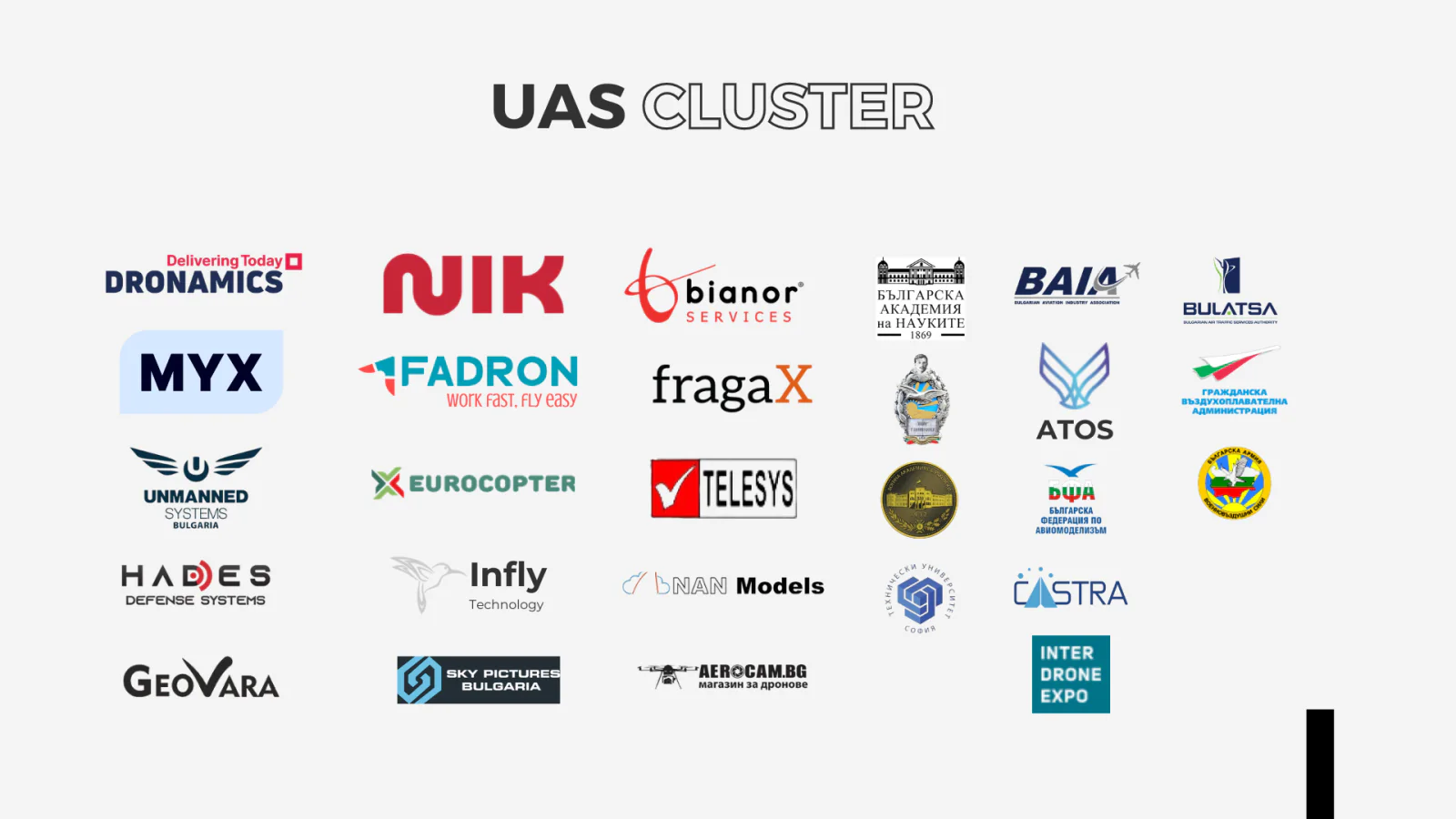
V. BIBLIOGRAPHY & INTERVIEWS
Bianor. Company Interview, 30 May 2024
Desislava Pingelov, Valko Pingelov (Land BG). Personal Interview, 23 May 2024
European Commission, “A Drone Strategy 2.0 for a Smart and Sustainable Unmanned Aircraft Eco-System in Europe”, Communication from the Commission to the European Parliament, the Council, the European Economic and Social Committee and the Committee of The Regions, 2022 (https://transport.ec.europa.eu/system/files/2022-11/COM_2022_652_drone_strategy_2.0.pdf)
European Commission, “EU Drone Sector state of play”, Commission Staff Working Document, 2022. (https://eur-lex.europa.eu/legal-content/ES/TXT/?uri=CELEX:52022SC0366)
Hristozov, Stefan. “ИСТОРИЯ НА БЪЛГАРСКИТЕ БЛА”. Military Academy – Georgi Stoykov Rakovski, 2017.
Ivo Barzov (Fraport). Personal Interview, 21 May 2024
Ivo Koev, Aneliya Marinova, Daniela Micheva, (DGDVA (Bulgarian Civil Aviation Authority)). Personal Interview, 16 May 2024
Ivo Kumanov (NIK Argo). Personal Interview, 28 May 2024
Julie Garland (Founder and CEO of Avtrain). Personal Interview, 31 May 2024
Lulcho Georgiev (Dronamics). Personal Interview, 29 May 2024
MYX. Company Interview, 30 May 2024
Nathanel Apter (UASolutions, FOCA). Personal Interview, 25 May 2024
Pieter Franken (HBS Dutch UAS Cluster). Personal Interview, 27 May 2024
Prof. Dimo Zafirov (Bulgarian Academy of Sciences). Personal Interview, 23 May 2024
Todor Ivandzhikov (Bulgarian Aviation Industry Association). Personal Interview, 16 May 2024